
GRP solutions for industry and infrastructure
Byggkomposit supplies GRP products and complete systems for environments where corrosion, moisture, chemicals, electrical installations or demanding working conditions place high requirements on the material.
Our solutions are used in industry, rail, energy, water and wastewater facilities, marine environments, stadiums, battery energy storage systems and the transport sector.
Explore the sectors below to see which products and properties are most relevant to your project.
Different sectors – similar challenges
Many operations share the same needs: safe walking surfaces, reliable access, limited maintenance and structures that cope with moisture, salt, chemicals and weather exposure.
GRP is a glass reinforced polymer composite that combines light weight with high resistance to corrosion. The material is also electrically non-conductive, which can be an advantage in rail, energy and other electrified environments.
The range includes grating, structural profiles, panels, handrailing, stairs, walkways, platforms, fencing, ladders and anti-slip products. Products can be used individually or combined into complete project-specific systems.
Corrosion resistant
GRP does not rust or rot and suits environments with moisture, salt and many chemicals.
Lightweight
Light components simplify transport, handling and installation.
Electrically non-conductive
The insulating properties of the material can be an advantage in rail, energy and electrical environments.
Low maintenance
GRP normally requires no painting, galvanising or anti-corrosion treatment.
Find solutions for your operation
Choose a sector to read more about common challenges, products and applications.
Industry
Safe access to machinery and process equipment in wet and chemically exposed areas.
Read more about IndustryMarine & Offshore
Long-life walking surfaces and access structures in saltwater and weather exposure.
Read more about Marine & OffshoreWater & Wastewater
Platforms, covers and walkways for waterworks, pumping stations and treatment plants.
Read more about Water & WastewaterStadiums & Arenas
Hard-wearing routes, ramps and service areas for spectators and staff.
Read more about Stadiums & ArenasRail
Platforms, trackside walkways and cable troughing for electrified environments.
Read more about RailEnergy & Renewables
Access and screening for power stations, switchgear yards and wind farms.
Read more about Energy & RenewablesBattery Energy Storage Systems
Walkways, fencing and service platforms around battery containers.
Read more about Battery Energy Storage SystemsVehicle & Transport
Working and driver platforms for workshops, depots and service halls.
Read more about Vehicle & TransportGRP for production, process and technical facilities
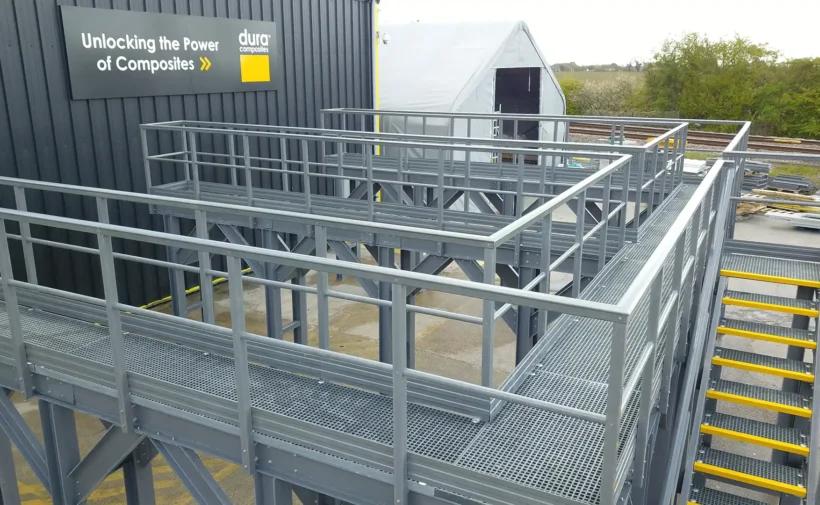
Industrial environments can involve heavy foot traffic, moisture, chemicals, oil, heavy installations and the need for safe access to machinery and process equipment.
GRP is used for walkways, working platforms, stairs, handrailing and anti-slip surfaces where metal structures risk corroding or require repeated surface treatment. Load, clear span and chemical exposure must be verified for each installation.
Typical solutions
- GRP grating
- working platforms
- walkways
- stairs and stair crossovers
- structural profiles
- handrailing and gates
- anti-slip floor sheets
- ladders
- technical screening
Corrosion resistant
For environments with moisture, process liquids and chemicals. Resistance is assessed against the actual medium and concentration.
Safe access
Anti-slip walking surfaces, handrailing and stairs for service and maintenance.
Flexible structures
Profiles and panels can be combined into project-specific platforms and crossings.
Corrosion resistant solutions for salt and moisture
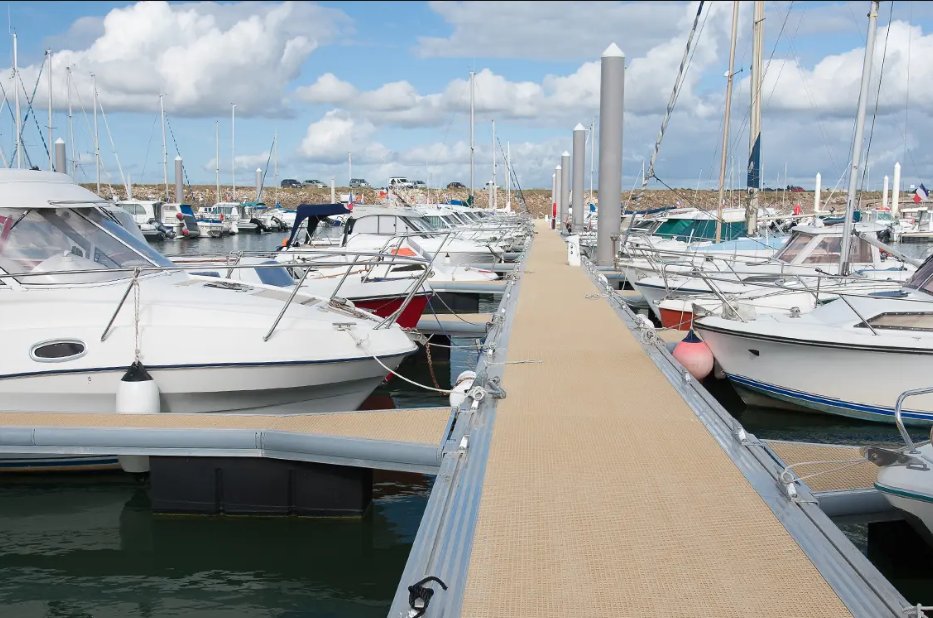
Pontoons, ports, marinas, coastal facilities and offshore installations are continuously exposed to seawater, weather, UV radiation and moisture.
GRP does not rust and is therefore a long-life alternative for walking surfaces, handrailing, ladders and access structures in marine environments.
Typical solutions
- pontoon decking and walking surfaces
- marine walkways
- rescue and access ladders
- handrailing
- stairs
- platforms
- structural profiles
- anti-slip products
- screening
Resistance to salt
GRP is not affected by corrosion in the same way as steel and aluminium.
Anti-slip when wet
Gritted walking surfaces provide stable grip in wet environments.
Lightweight
Light products simplify installation on pontoons and in hard-to-reach locations.
Access solutions for wet and chemically exposed environments
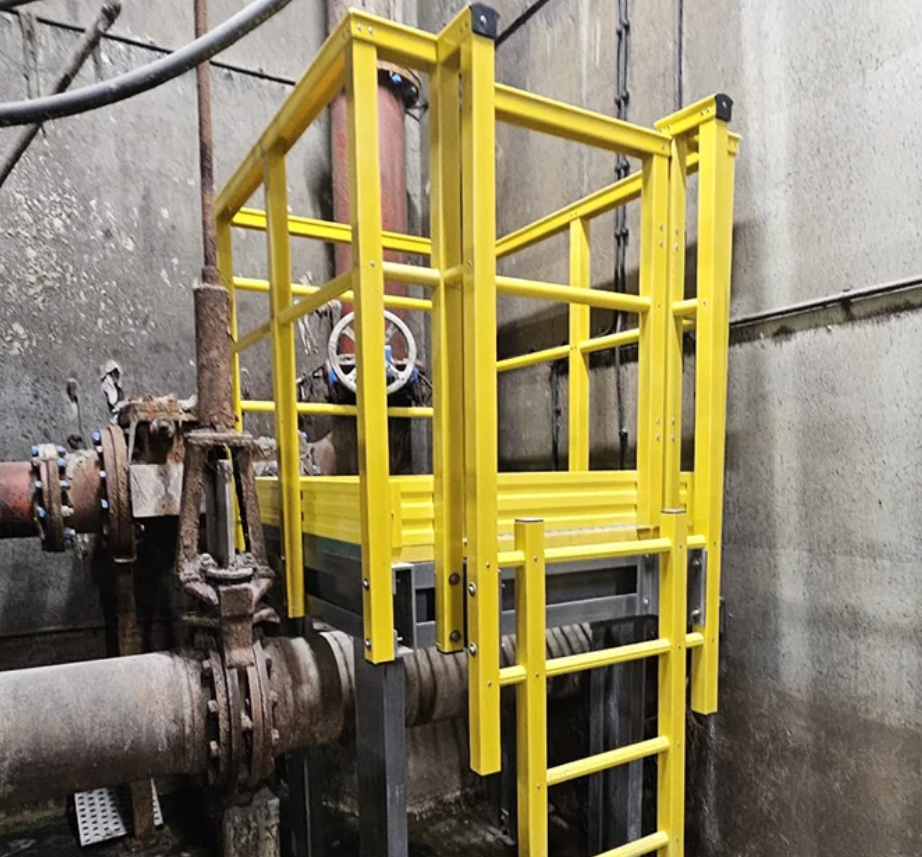
Waterworks, pumping stations, wastewater treatment plants and other water facilities expose structures to high humidity, water, chemicals and corrosive gases.
GRP is used for walkways, platforms, trench and chamber covers, stairs, handrailing and ladders with a limited need for repeated corrosion protection. Covers and platforms are sized from load, span and supports.
Dura Composites highlights the use of GRP for wet wells, access platforms, channels, walkways and chemically exposed flooring in the water and wastewater sector.
Typical solutions
- access platforms
- grating
- trench and chamber covers
- walkways
- stairs
- ladders
- handrailing
- structural profiles
- chemically exposed flooring
For aggressive environments
Resistance to moisture, many chemicals and corrosive exposure. Chemical resistance is verified against the actual medium.
Safe walking surfaces
Anti-slip surfaces for recurring operation and maintenance work.
A long-term material choice
Limited need for painting, galvanising and corrosion protection.
Safe walking surfaces for public and service areas
Stadiums, arenas and event venues need hard-wearing walking surfaces, clear routes and safe technical access for both spectators and staff.
GRP can be used in walkways, ramps, stairs, platforms and technical service areas where light weight, anti-slip properties and weather resistance matter.
Typical solutions
- walkways
- stairs and stair treads
- ramps
- service platforms
- handrailing
- anti-slip products
- access ladders
- technical flooring
Hard-wearing surfaces
Developed for environments with recurring foot traffic.
Anti-slip
Gritted surfaces for walkways, stairs and ramps.
Flexible installation
Light components can ease installation and refurbishment in existing venues.

GRP for track, stations, depots and technical access
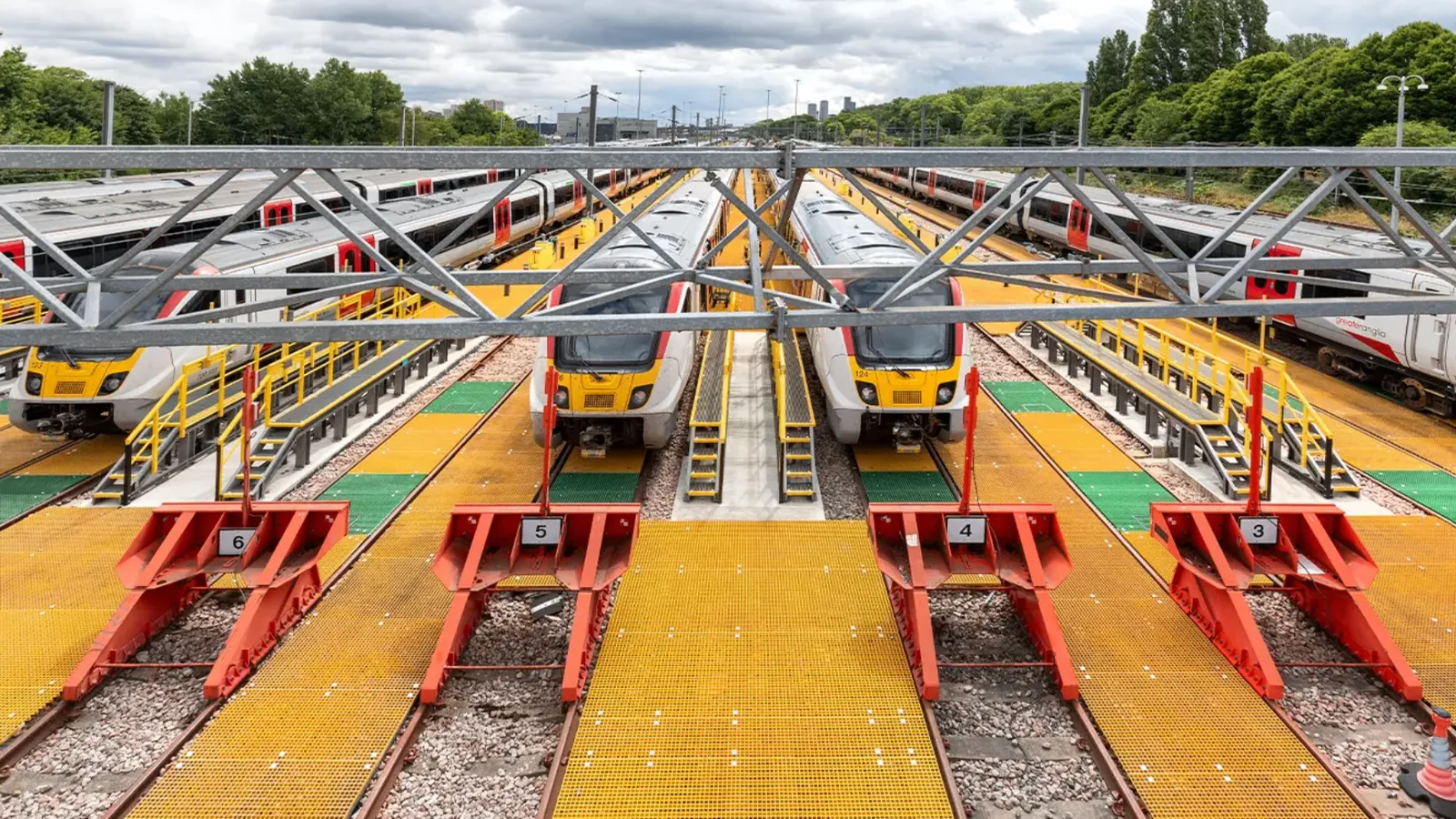
Rail environments require materials that cope with weather, vibration, electrification and limited installation windows.
The light weight and electrically non-conductive properties of GRP make it suitable for walkways, platforms, stairs, fencing, cable troughing and access structures along the track and in depots.
Typical solutions
- station platforms
- trackside walkways
- driver platforms
- stairs on embankments and slopes
- stair crossovers
- handrailing and gates
- fencing
- cable troughing
- illuminated walkways
- bridge and viaduct decking
Electrically non-conductive
Can offer advantages in electrified rail environments compared with metallic alternatives.
Easy to handle
Light weight can reduce the need for heavy lifting equipment and simplify work on site.
Complete systems
Walking surface, profiles, handrailing, stairs and gates can be combined.
Electrically non-conductive solutions for power and renewable energy
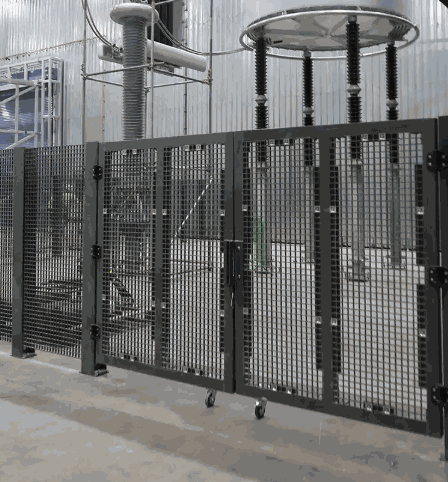
Power stations, switchgear yards, substations, wind farms and other energy environments require safe access and materials that cope with weather, moisture and electrical installations.
GRP is used for walkways, stairs, ladders, platforms, trench covers, fencing and handrailing. The material is electrically non-conductive, corrosion resistant and non-sparking.
Typical solutions
- access platforms
- walkways
- stairs and crossovers
- ladders
- trench and cable protection
- fencing and screening
- handrailing
- structural profiles
- fire-rated GRP where documentation requires it
Electrically non-conductive
The material does not conduct electricity and can offer safety advantages in electrified environments.
Corrosion resistant
Suitable for both indoor and outdoor installations.
Efficient installation
Light and prefabricated components can reduce work on site.

GRP for safe access and screening at BESS facilities
Battery energy storage systems require controlled access, clear demarcation and material choices that work in environments with electrical equipment and outdoor exposure.
GRP can be used for walkways, platforms, stairs, handrailing, fencing and technical screening around battery containers and associated installations.
The electrically non-conductive and corrosion resistant properties of the material can bring practical benefits, but they do not replace the project's fire protection, electrical risk assessment or other safety measures.
Typical solutions
- walkways between containers
- service platforms
- stairs and ramps
- fencing and gates
- technical screening
- handrailing
- cable and trench covers
- structural profiles
Controlled access
Fencing, gates and walkways can help manage movement and service work.
Electrically non-conductive material
GRP can be a suitable complement in environments with electrical installations.
Weather resistant
Resistance to moisture, corrosion and weather exposure.
Access solutions for depots, workshops and service facilities
Vehicle workshops, depots, service halls and transport facilities need safe access to vehicles, machinery and technical equipment.
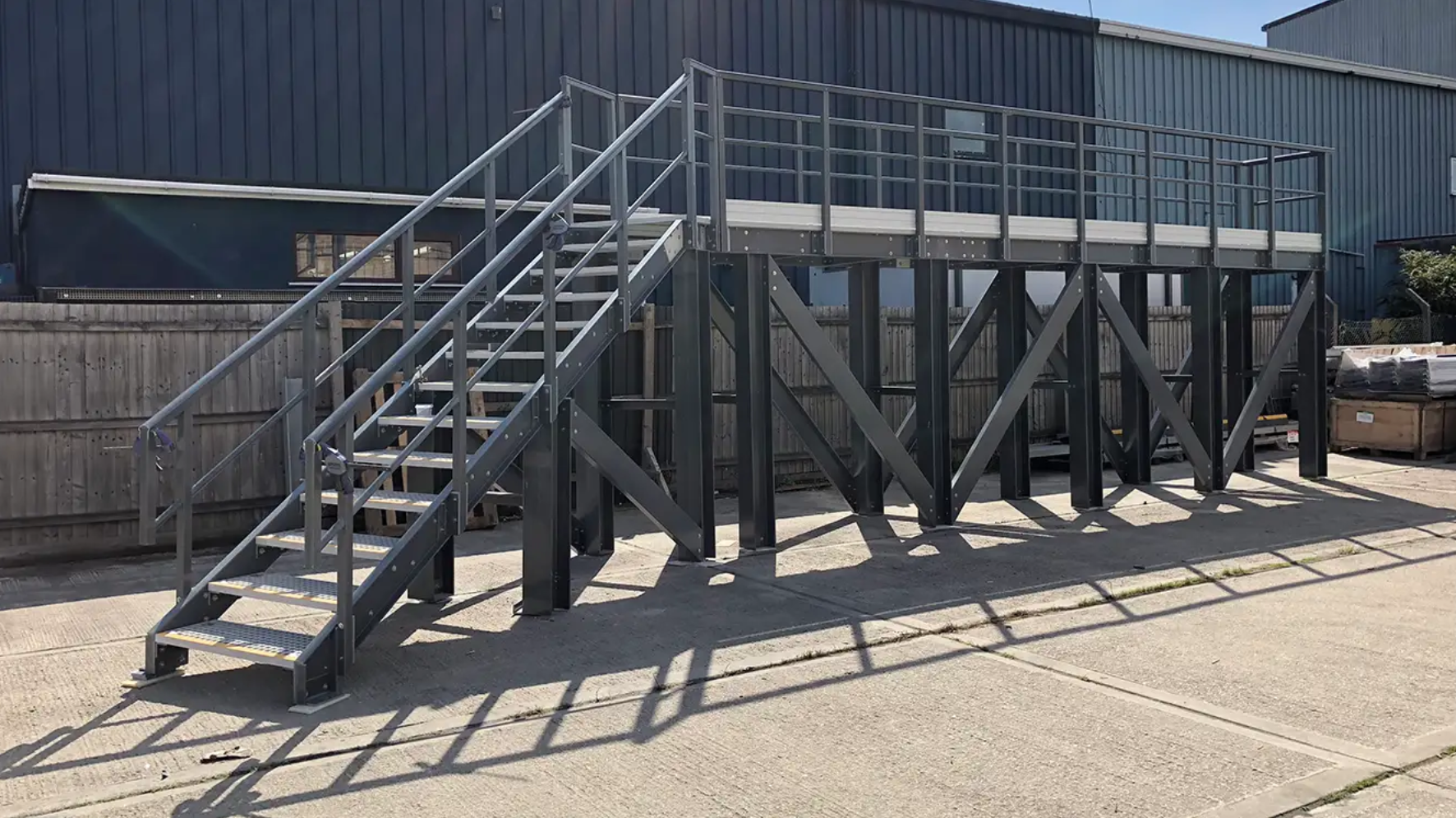
GRP can be used for working platforms, driver platforms, walkways, stairs and anti-slip surfaces where light weight, corrosion resistance and electrically non-conductive properties are important.
Typical solutions
- working and service platforms
- driver platforms
- walkways
- stairs and crossovers
- handrailing and gates
- anti-slip products
- structural profiles
- ladders
- technical screening
Safe service access
Platforms and stairs can be adapted to the vehicle and the work being carried out.
Anti-slip surfaces
Gritted walking surfaces provide stable grip in workshop and depot environments.
Modular construction
Profiles, grating, handrailing and gates can be combined to suit the facility.
We help you find the right system
The same GRP product can be used in different ways depending on sector, environment and loading.
A walkway at a treatment plant may need high chemical resistance, while a rail solution may require electrically non-conductive properties and a short installation window.
We help you choose a solution based on:
- environment and exposure
- loading and clear span
- foot traffic and anti-slip requirements
- corrosion and chemical exposure
- electrical installations
- fire requirements
- connections and substrates
- delivery and installation conditions
Product selection
Help choosing the right panel, profile, grating, handrailing or access solution.
Technical documentation
Product data, drawings and documentation for design and decision-making.
Complete systems
Made-to-measure structures with walking surface, supporting structure, handrailing and fixings.
Explore our GRP range
- GRP grating
- GRP profiles
- GRP handrailing
- GRP stairs and access
- GRP walkways
- GRP fencing
- GRP platforms
- GRP steps and anti-slip
- Specialist GRP products
Questions about GRP across sectors
Which sectors use GRP?
GRP is used in industry, rail, energy, water and wastewater, marine operations, construction, transport, arenas and battery storage. The material is particularly suitable where structures are exposed to corrosion, moisture, salt, chemicals or electrical installations.
Which GRP products are used most often?
Common products are GRP grating, structural profiles, handrailing, walkways, stairs, ladders, platforms, fencing and anti-slip products. Products can be ordered as components or combined into complete structures.
Does the same product suit every sector?
No. Product selection depends on loading, clear span, foot traffic, chemical exposure, electrical installations and fire requirements. The correct product variant and system build-up must be chosen for each project.
Can GRP be used in electrified environments?
Yes. GRP is electrically non-conductive and can therefore be a suitable alternative to metal in rail, energy and battery storage environments, for example. The material choice does not replace electrical risk assessment or other necessary safety measures.
Can Byggkomposit help with complete structures?
Yes. Byggkomposit can help with product selection, technical documentation, made-to-measure fabrication and coordination of complete GRP systems. The scope of services is agreed for each project.
How do we get help choosing the right solution?
Send a drawing, photograph, sketch or description of the environment, loading and use. Byggkomposit will come back with questions and suggestions for suitable products or next steps.
What challenge do you need to solve?
Describe the environment, the structure or the problem and we will help you find a suitable GRP solution.
Feel free to attach a drawing, photograph or technical document. It does not matter if the project is still at an early stage.